The Best Startup Accelerators and Incubators in France (2026)
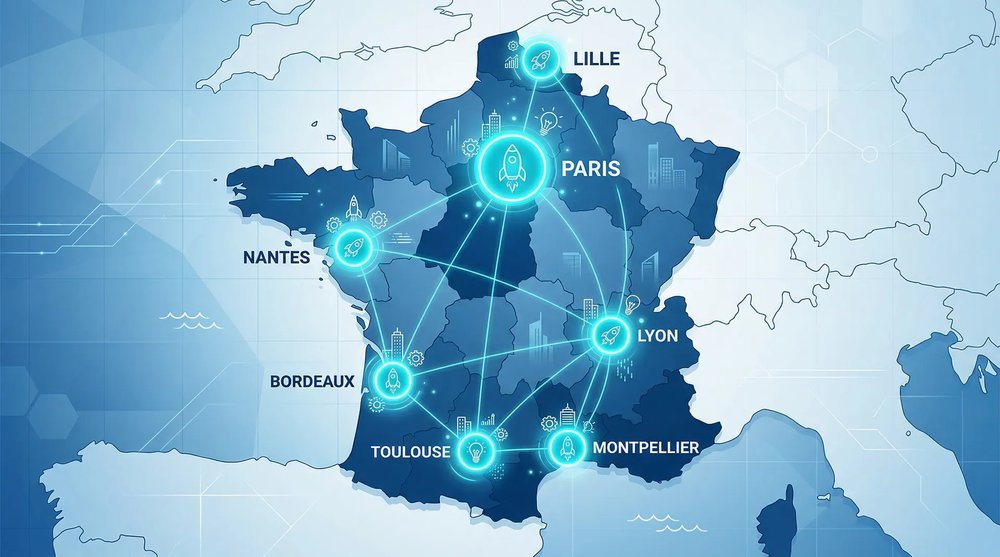
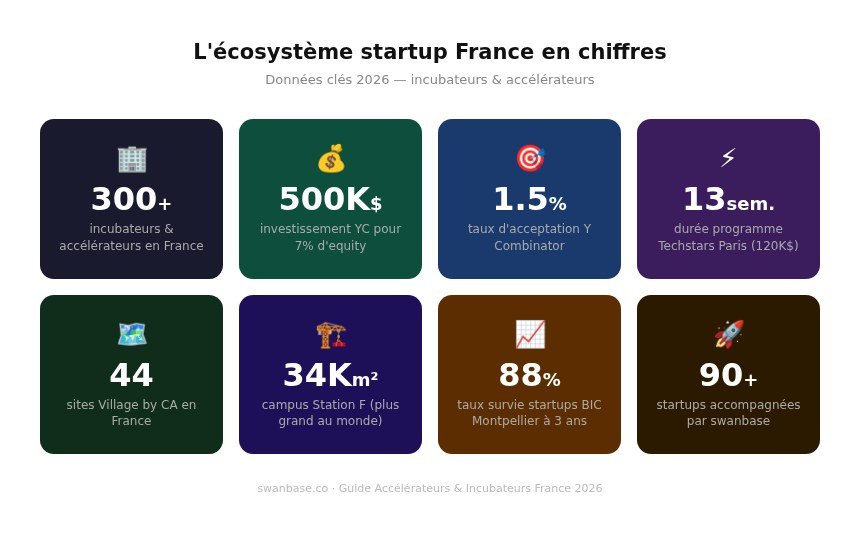
France has more than 300 incubators and accelerators supporting startups, from idea to scale. They are far from equal, and picking the wrong program can cost you 6 to 24 months (and sometimes equity for nothing). The fundamental difference: an incubator helps you turn an idea into a viable business, through prototyping, validation, and the hunt for first customers. An accelerator takes a startup that already has traction and helps it scale: growth, fundraising, international expansion. This guide reviews the best programs in 2026, region by region, with concrete criteria for picking the one that matches your stage. You will also find the questions nobody asks before applying, and the traps too many founders discover too late.
Incubator vs accelerator: the real differences
You hear "incubator" and "accelerator" used interchangeably. That mistake can be expensive. Joining an incubator when you need an accelerator is like going back to driving school when you already know how to drive. You lose time. The reverse is worse: joining an accelerator without traction is like boarding a high-speed train without knowing where you are going.
The two structures answer radically different needs, at different moments in a startup's life.
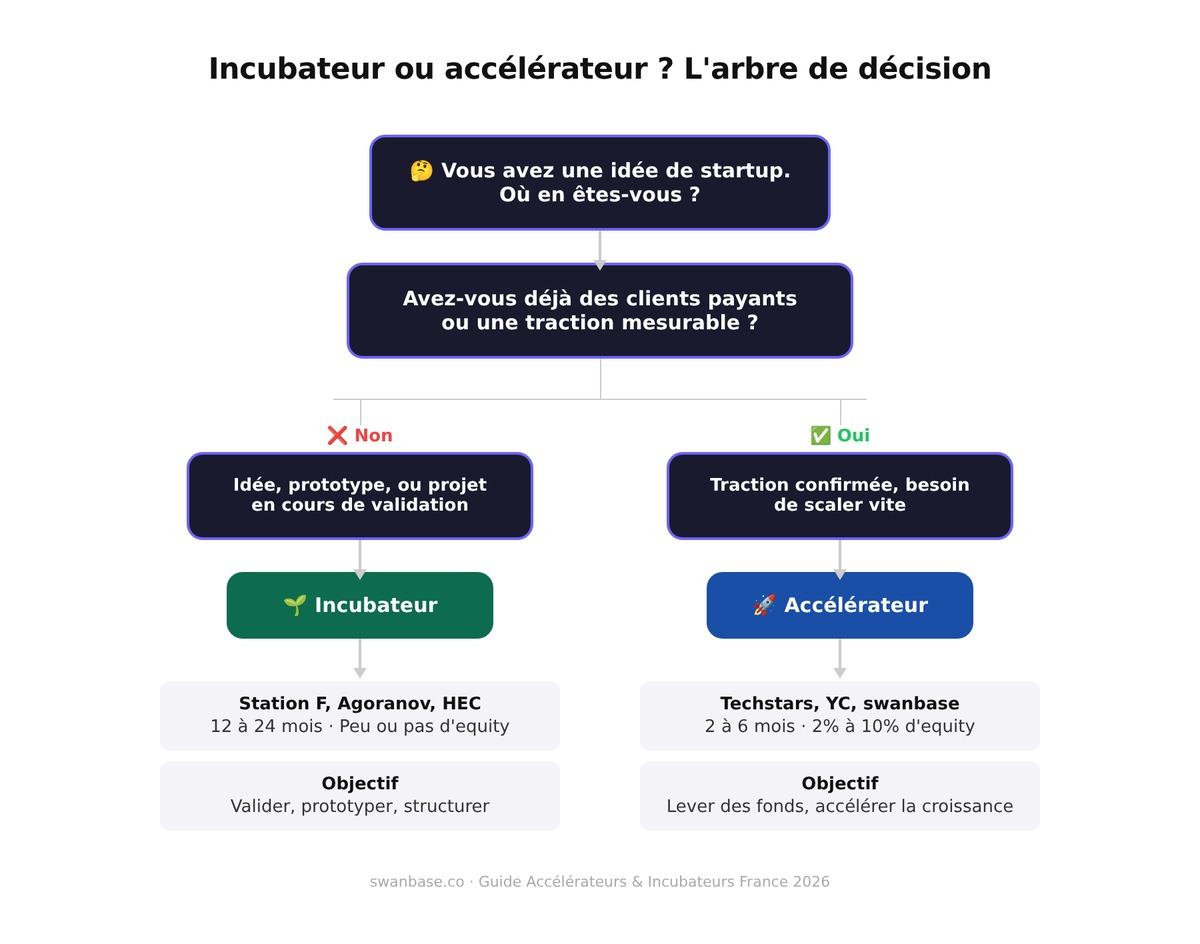
The incubator: turning an idea into a viable business
An incubator steps in at the very beginning. You have an idea, maybe a prototype, but no customers yet. The incubator gives you a framework to structure your project: workspace, mentoring, network access, sometimes early funding.
A typical incubation program runs 12 to 24 months. That is long, and that is normal. Building the foundations of a company takes time. Public incubators (those tied to universities or local governments) are often free or low-cost. Private incubators may charge monthly rent, and rarely take equity at this stage.
What you actually walk away with: a validated lean canvas, a tested prototype, a first real understanding of your market, and a peer network going through the same struggles you are.
The accelerator: going from traction to scale
An accelerator is a different world. You already have a product, first customers, measurable traction. The accelerator compresses into a few weeks what would take months on your own: sharpening your growth marketing strategy, preparing a fundraise, structuring customer acquisition.
Programs usually run 2 to 6 months. They are intense. Many take equity (between 3% and 10% depending on the program) in exchange for capital, mentorship, and an investor network. Techstars, for example, offers a standard deal of $120,000 for 6% of your company.
The question is not "incubator or accelerator?" The question is: where are you today?
Comparison table (duration, equity, profile, goals)
| Criterion | Incubator | Accelerator |
|---|---|---|
| Startup stage | Idea, prototype, pre-revenue | Traction, first customers, revenue |
| Typical duration | 12 to 24 months | 2 to 6 months |
| Equity taken | Rarely (0-2%) | Often (3-10%) |
| Direct investment | Rare | Common (20K to 500K+) |
| Main goal | Validate the idea, structure the project | Scale, raise funds |
| Intensity | Moderate, founder's own pace | High, structured program |
| Cost | Free to a few hundred euros/month | Equity or free (funded by investment) |
| Mentoring | Generalist | Specialized, intensive |
| Investor network | Limited | Central (demo days, introductions) |
The best incubators in France in 2026
France has one of the most dynamic startup ecosystems in Europe, and its incubators are a big reason why. Here are the structures that have proven themselves, program after program, cohort after cohort.
Station F (Paris)
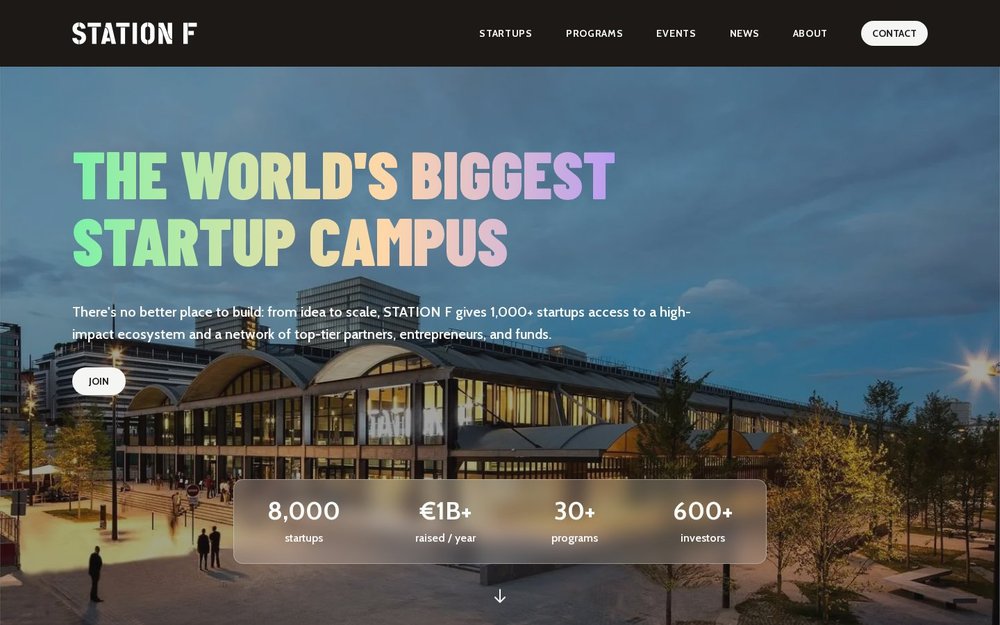
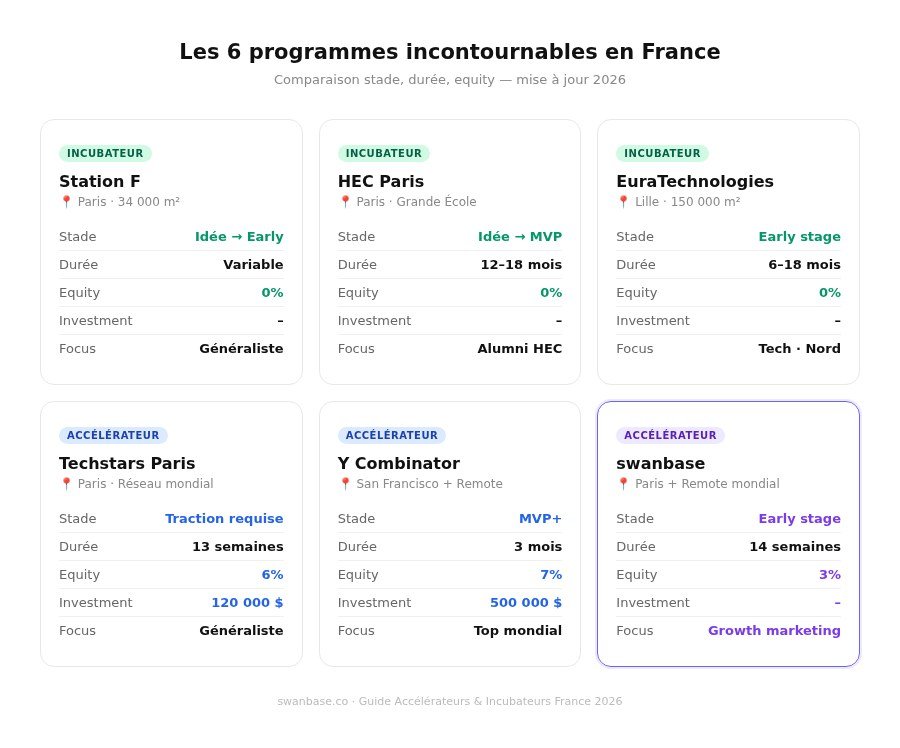
Station F is the heavyweight. Opened in June 2017 by Xavier Niel in the former Halle Freyssinet (Paris 13th arrondissement), the campus covers 34,000 m2. It is the largest startup campus in the world. The number is impressive. So is the reality.
Station F is not a single incubator: it is a platform hosting more than 30 partner programs, from Microsoft to Facebook to LVMH and Ubisoft. Each program has its own criteria, duration, and focus. You do not "apply to Station F": you apply to one of the programs hosted on campus.
Resident startups get access to a complete ecosystem: 24/7 workspaces, daily events, investor access, and above all a density of founders that makes chance encounters as valuable as the program itself. The in-house Fighters Program specifically targets founders from disadvantaged backgrounds or refugee communities.
The flip side: Station F is Paris, and it is an environment that can be as overwhelming as it is stimulating. Competition for mentors' attention is real.
HEC Paris Incubator
The HEC incubator is one of the most selective incubation programs in France. Founded in the early 2000s, it draws on the HEC alumni network (more than 70,000 graduates worldwide), a serious competitive advantage for founders looking for B2B introductions or first corporate customers.
The program offers 12 to 18 months of support with one-on-one mentoring from experienced entrepreneurs and executives. One notable detail: the HEC incubator takes no equity. It is open to HEC alumni but also to outside founders, provided the project is convincing and the growth potential is clear.
Startups incubated at HEC have collectively raised several hundred million euros. The network is the real value: corporate connections in a French grande école environment remain hard to replicate anywhere else. For terms, pricing, batch calendars, and how to get in without an HEC degree, see our guide HEC Paris Incubator: how to get in.
Le Village by CA (nationwide)
With 44 sites across France (plus outposts in Italy and Luxembourg), Le Village by CA is the largest accelerator network in Europe by number of sites. This is Crédit Agricole's strength at work: a territorial footprint nobody else can match.
The model is simple. Le Village connects innovative startups with partner companies (often local SMEs and mid-caps, all Crédit Agricole clients) to create concrete business synergies. The program runs 1 to 3 years, with no equity taken.
The network has supported roughly 3,000 startups since it launched. The main draw: if your startup sells B2B to mid-sized French companies, Le Village by CA gives you direct access to a pool of qualified prospects. It is less prestigious than Station F. It is often more useful for signing your first contracts.
EuraTechnologies (Lille)
EuraTechnologies, opened in 2009 in Lille, is one of the largest incubation and acceleration sites in Europe. The 150,000 m2 campus hosts more than 300 startups and tech companies, with a full ecosystem covering incubation, acceleration, coworking, and training.
The Startup Act incubation program supports early-stage projects over 6 to 18 months with personalized mentoring, workshops, and access to the Hauts-de-France investor network. EuraTechnologies also runs a shorter, more intensive acceleration program for growth-stage startups.
EuraTech's strength: a dense community in a city where the cost of living is far below Paris, with privileged access to talent from Lille's top schools (Centrale Lille, EDHEC, Université de Lille). For founders who want to stay out of the Paris bubble, it is a credible alternative.
Agoranov, Schoolab, and other essentials
Agoranov (Paris) is one of the most respected deeptech incubators in France. Founded in 2000, it is tied to the Paris universities (Paris-Saclay, Sorbonne, PSL) and focuses on projects with a strong technological or scientific component. If your startup is built on fundamental research, this is where you should apply. Agoranov has incubated successes like Criteo and Aldebaran Robotics.
Schoolab (Paris), formerly Paris&Co Schoolab, offers a hybrid model between incubation and open innovation. The approach is collaborative: startups work directly with large corporate partners on concrete problems. It is a useful springboard if your go-to-market runs through corporate B2B.
Paris&Co, the City of Paris incubator network, also deserves a mention. With its thematic platforms (health, smart city, tourism, sport), it offers sector-specific support that few generalist incubators can match. More than 400 companies supported every year.
Le Camping / WILCO (Paris) has supported hundreds of startups since 2011 through a 6-month acceleration program. Now renamed WILCO, it still offers structured support with a solid mentor network.
Paris alone concentrates more than 250 support structures. Our guide to the 12 best incubators and accelerators in Paris compares them by target stage, with the equity and cost of each.
The best accelerators in France in 2026
While incubators are well documented online, accelerators remain oddly under-represented in existing guides. That is a problem: a founder who already has traction is precisely the one who should be looking for an accelerator. Here are the programs that matter.
Techstars Paris
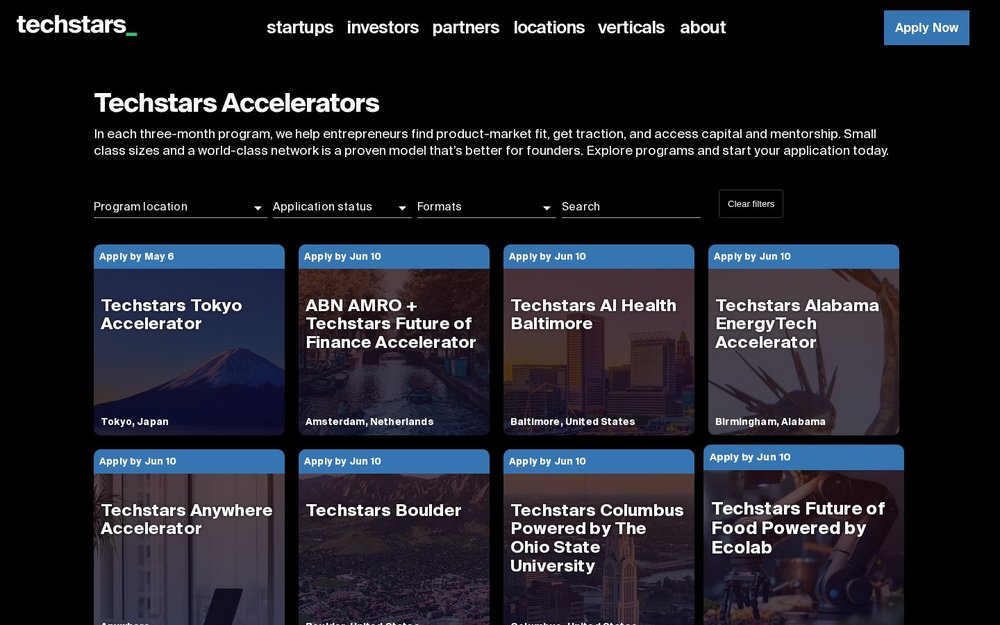
Techstars is one of the most recognized accelerators in the world, and its Paris program is part of the global network. The deal is standardized: $120,000 invested in exchange for 6% equity. The program runs 13 intensive weeks.
What sets Techstars apart is the network. Joining Techstars Paris gives you access to a global network of more than 4,000 Techstars alumni, thousands of mentors, and an investor ecosystem that knows and trusts the brand. The Demo Day at the end of the program is a genuine springboard toward a seed or Series A round.
The acceptance rate is low (roughly 1 to 2% of applications). Selection is rigorous. Techstars looks for strong teams with a product already in market and early signs of traction. If all you have is an idea, this is not the moment.
Y Combinator (Europe track)
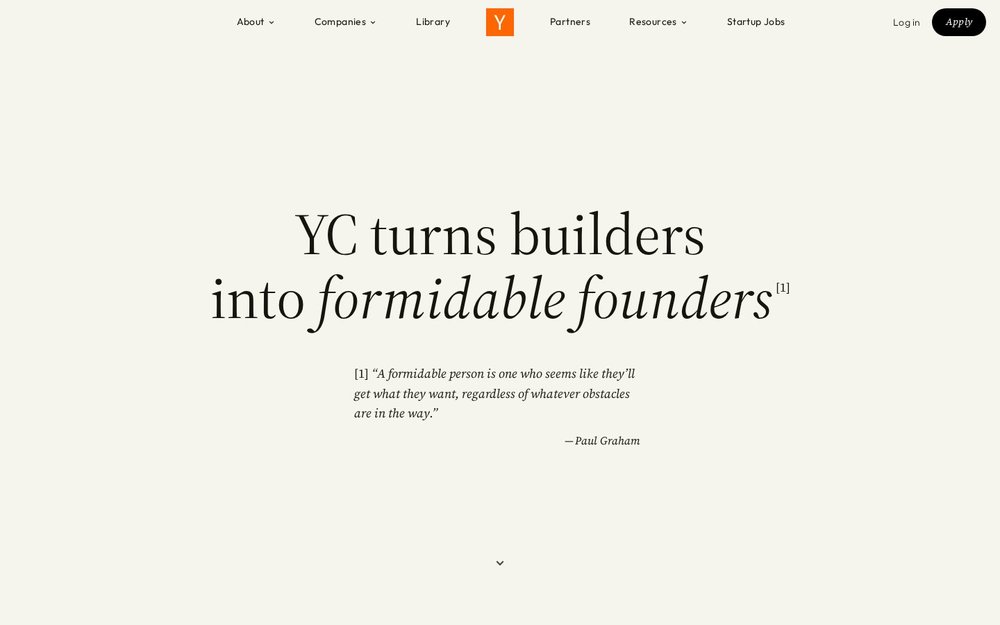
Y Combinator, based in San Francisco, remains the global benchmark for accelerators. With an acceptance rate of roughly 1.5%, it is also the most selective. Since 2021, YC has opened its program to startups that stay in their home country (the program went partially remote), which makes it accessible to French founders without relocating to California.
The current deal: $500,000 invested ($125,000 for 7% equity plus a $375,000 SAFE). The program runs 3 months. French startups that have been through YC include successes like Algolia, Scaleway (formerly Online.net), and Ynsect.
Applying to YC from France is realistic. The process is entirely online and interviews happen over video. The barrier is not geographic: it is the quality of the project and the team. We break it all down in our guide on how to get into Y Combinator as a French founder: the real criteria, the anatomy of the application form, and the classic mistakes French founders make.
swanbase (Paris / remote, growth marketing)
Most accelerators focus on product or fundraising. swanbase took a different angle: growth marketing. It is a Paris-based accelerator, accessible remotely from anywhere in the world, targeting early-stage startups with long-term support centered on customer acquisition: talks, private workshops, dinners, group office hours, and unlimited 1-1s with growth marketing specialists all year round.
The starting observation is simple: plenty of founders build a good product but do not know how to sell it. swanbase fills that gap by working with startups on marketing strategy, SEO, paid acquisition campaigns, and customer acquisition cost (CAC) optimization. The accelerator has supported more than 90 startups over eight years.
The model: 2% equity, no fees. Startups get weekly sessions with growth experts, unlimited access to mentors, and more than 50 exclusive marketing resources. The program is fully remote-friendly, so founders anywhere in the world can take part without geographic constraints. swanbase is worth serious consideration for startups looking to put real structure behind their customer acquisition.
Sector-specific and specialized accelerators
Beyond the generalist programs, specialized accelerators offer niche support that is often more relevant than the big names:
Wilco (formerly Le Camping, Paris): a 6-month program for B2B startups focused on connecting them with large accounts. No equity taken.
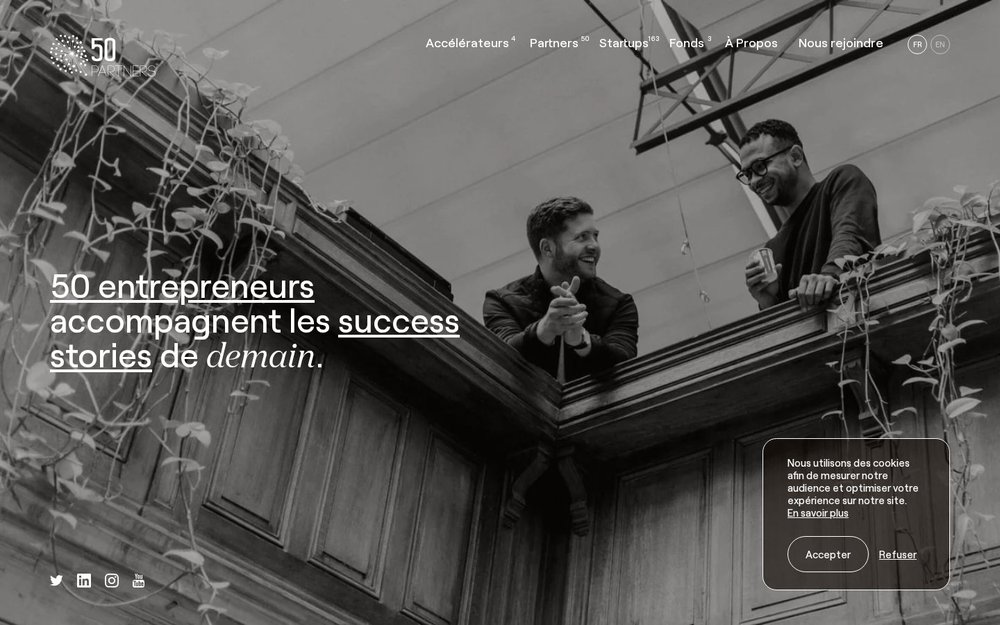
50 Partners (Paris): an accelerator founded by entrepreneurs for entrepreneurs. The program is short (3 months) and built around mentoring by founders who have already scaled. 50 Partners invests between 50,000 and 200,000 euros at early stage.
TheFamily (historically Paris; the program shut down in 2021, but its influence on the ecosystem is still felt) supported more than 500 startups and helped shape an entire generation of French founders.
Notable sector-specific accelerators:
- Plug and Play France: an international program focused on verticals (fintech, health, supply chain)
- Season (formerly Axeleo): an accelerator dedicated to B2B SaaS startups
- Food'Inn Lab (AgroParisTech): a foodtech accelerator
- Le Tremplin: the City of Paris sportstech accelerator
How to choose between an incubator and an accelerator
You are convinced a support program would do you good. The next question is: which one? Many founders apply to the most prestigious program they can find. That is the wrong approach. The best program for you is the one that solves the problem you have right now, not the one with the nicest logo.
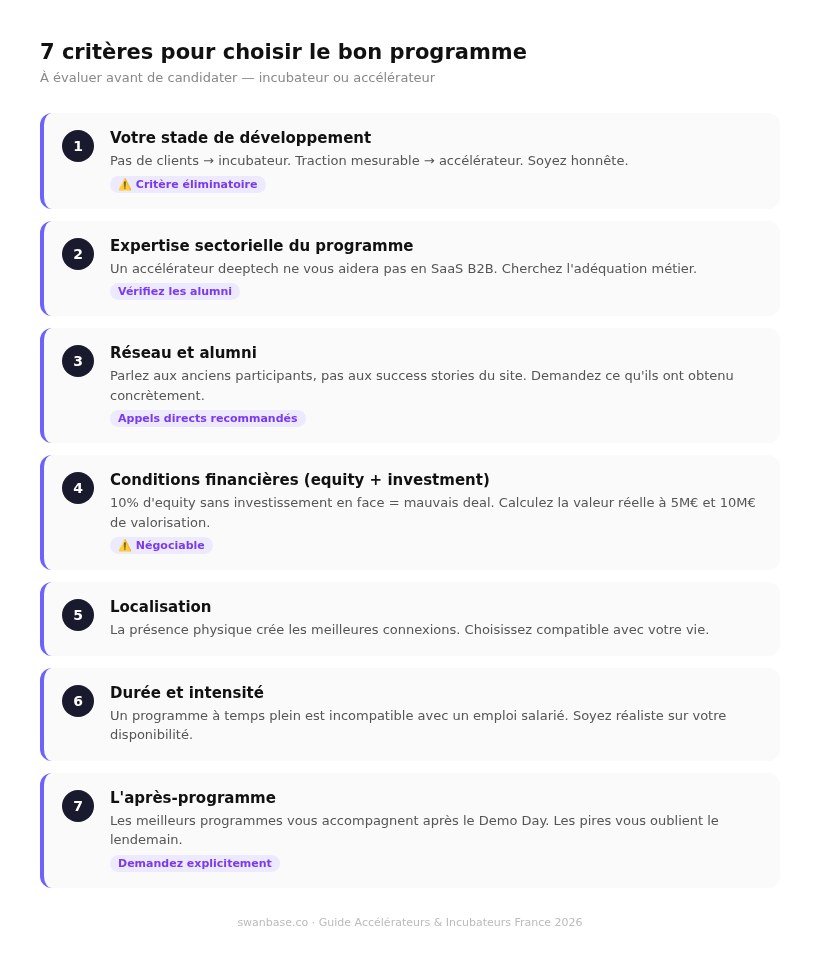
The 7 criteria to assess before applying
1. Your stage. Be honest. No customers? Incubator. Customers and revenue, even modest? Accelerator. Applying to an accelerator with nothing but an idea wastes your time and the selection committee's.
2. The program's expertise in your field. A deeptech accelerator will not help you if you are in B2B SaaS. A generalist incubator will not understand medtech regulatory constraints. Look for sector fit.
3. The alumni network. Talk to former participants. Not the success stories on the website, the people who actually went through it. Ask them what they got out of it concretely. The best programs have alumni who pick up the phone for each other.
4. The financial terms. How much equity? What investment in return? What fees? A program that asks for 10% equity with no investment attached is a bad deal. Full stop.
5. Location. Being physically present still matters, even in 2026. Informal encounters, lunches with mentors, proximity to the other founders in the program: that is where the most valuable connections form. Pick a place that fits your life.
6. Duration and intensity. A full-time 3-month program is not compatible with a founder who still has a salaried job. Be realistic about your availability.
7. Life after the program. What happens next? The best programs keep supporting you. The worst forget you the day after Demo Day.
The questions to ask in the interview
Do not let the selection interview run one way. You are evaluating the program too. These are the questions that reveal what an incubator or accelerator is really worth:
- "What is your startups' three-year survival rate?" If they do not know that number, it is a weak signal.
- "Can you put me in touch with 3 alumni from the last cohort?" A refusal is a red flag.
- "What is your mentors' background? Are they operators or consultants?" The difference is fundamental. A mentor who has sold a company will give you radically different advice from a consultant who teaches strategy.
- "How does Demo Day work? Who is in the room?" Demo Day is supposed to be your springboard to investors. If the room is only journalists and politicians, the value is limited.
- "What is the exclusivity clause?" Some programs prevent you from applying elsewhere or working with other investors for the duration. Read the fine print.
Traps to avoid (equity, exclusivity, empty promises)
The free equity trap. Some incubators ask for equity (5%, 7%, sometimes 10%) without investing a cent in return. They call it "program fees." In reality, you are paying rent with the most valuable thing you own: shares in your company. Work out what those percentages mean if your startup is one day worth 10 million euros. 5% is 500,000 euros. For mentoring and a desk?
The exclusivity trap. Some programs bind you with exclusivity clauses that stop you from raising during the program, or give them a right of first refusal on your next round. Have a lawyer read those clauses. If you are looking to find a co-founder or raise from VCs, make sure your program is not blocking you.
The vanity metrics trap. "200 startups supported, 50 million raised." Those numbers mean nothing if 3 startups account for 90% of the money raised. Ask for the median, not the average.
The phantom program trap. Some programs look impressive on paper (masterclasses, mentoring sessions, workshops), but in practice everything rests on one or two overloaded mentors who do not have time for each startup individually. Check the mentor-to-startup ratio.
Incubators and accelerators by region
The French startup ecosystem is not just Paris. Some of the best support structures are in the regions, with concrete advantages: lower cost of living, proximity to specific industrial ecosystems, and more personal attention than in the Paris mega-structures.
Paris and Île-de-France
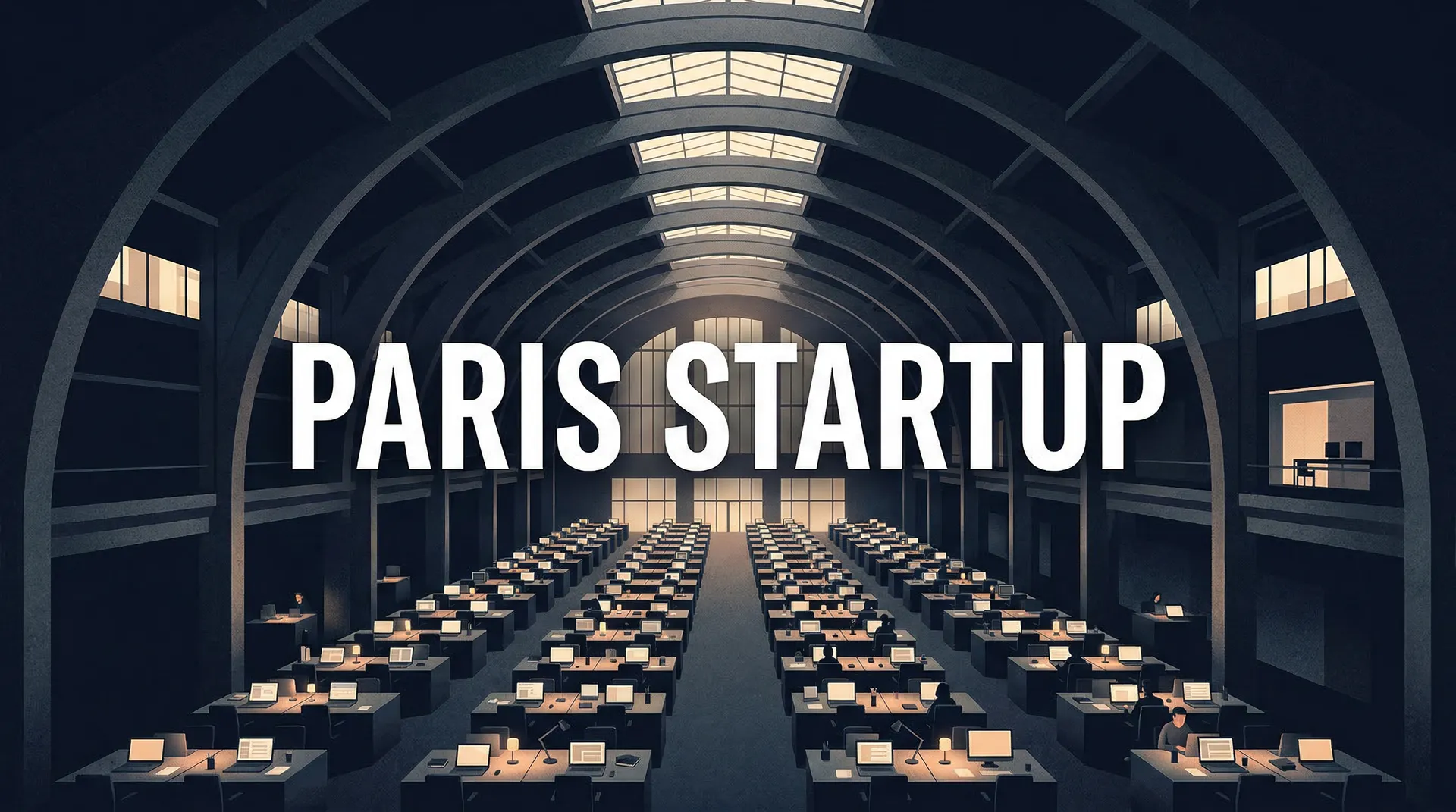
Paris naturally concentrates most of the programs: Station F, the HEC incubator, Agoranov, Schoolab, WILCO, Techstars Paris, 50 Partners, and dozens more. It is also where most VC funds are, which makes fundraising easier.
The Paris advantage: network density, investor access, international visibility, concentrated talent.
The Paris drawback: high cost of living, intense competition for attention (you are one startup among thousands), and an ecosystem that can become a bubble disconnected from the rest of the French market.
For founders targeting an international market or a large fundraise, Paris remains the logical choice. For those building a B2B product for the French market, the regions often offer a better signal-to-noise ratio.
Montpellier and Occitanie
Montpellier has become one of the most dynamic innovation hubs outside Paris. The ecosystem rests on several complementary pillars:
- BIC Montpellier: ranked in UBI Global's global Top 5 public incubators, with an 88% three-year startup survival rate (versus 72% nationally). Four support tracks, from 2 months to 2 years.
- La Halle de l'Innovation: opened in October 2023, 8,000 m2, 60 companies hosted, a 21.4 million euro investment by the metropolitan authority.
- WeSprint: a seed-stage accelerator investing between 25,000 and 100,000 euros for 3 to 5% equity.
For a complete guide to the local ecosystem, see our dedicated article on incubators and accelerators in Montpellier.
Toulouse rounds out the Occitanie picture with a strong aerospace ecosystem (the Starburst accelerator, the Nubbo incubator, the Aerospace Valley cluster).
Lyon, Nantes, Lille, Toulouse, Bordeaux
Lyon has a mature ecosystem with the PULSALYS incubator (research commercialization), H7 (the city's innovation hub housed in the former Hôtel-Dieu), and a booming B2B SaaS scene. Proximity to Grenoble (CEA, microelectronics) strengthens the region's deeptech appeal.
Nantes has established itself as an attractive innovation hub with the Quartier de la Création, the Atlanpole incubator, and a competitive cost of living. The Nantes ecosystem is particularly strong in cultural and creative industries, digital, and health. The city attracts founders leaving Paris without sacrificing quality of life.
Lille, with EuraTechnologies as its flagship, offers a complete environment: incubation, acceleration, training, and a dense industrial fabric. Its proximity to Belgium, the Netherlands, and the UK makes it a natural entry point for startups targeting the northern European market.
Toulouse combines aerospace (Starburst, ESA BIC), artificial intelligence (ANITI), and a powerful university campus. The ecosystem is less generalist than Paris but exceptionally deep in its specialties.
Bordeaux has seen its startup ecosystem take off in recent years, driven by Le Campement (accelerator), Base Innovation, and the city's appeal to tech talent. The high-speed rail link to Paris (2 hours) makes it easy for founders who need a foot in both cities.
How to get into a program: the application process
Applying to an incubator or accelerator is not sending a resume. It is a process you prepare, refine, and negotiate.
Typical requirements and prerequisites
Criteria vary from one program to the next, but some fundamentals come up every time:
- A team, not an individual. The vast majority of programs prefer teams of 2 to 3 co-founders. A solo founder can apply, but will be at a disadvantage. If you are on your own, our guide to finding a co-founder can help.
- A real, identified problem. Not a solution in search of a problem. Selection committees want to see that you understand a market and a customer pain deeply.
- Measurable traction (for accelerators). Revenue, active users, a waitlist, letters of intent. Something concrete.
- Proven execution. Ideas are not in short supply. Founders who execute are. Show what you have already built.
- Growth ambition. Incubators and accelerators want startups aiming at a significant market, not lifestyle projects.
Preparing your application
The application plays out in two stages: the written submission and the live pitch.
For the written submission:
- Write a summary of your project in 3 sentences (problem, solution, traction). If you cannot, your project is not clear enough yet.
- Prepare your key metrics: user numbers, monthly revenue, growth rate, CAC, LTV. If you do not know those figures, start with our guide to growth marketing for startups.
- Explain why THIS program, and not another one. Selection committees spot mass-sent applications immediately.
- Show your team. Backgrounds, complementarity, commitment. The best programs invest in people, not ideas.
For the pitch:
- 3 minutes, not 30. Get to the point.
- Problem, solution, traction, team, ask. In that order.
- Prepare for hard questions. A committee that challenges your model is a good sign: it means they are interested.
Negotiating the terms (equity, services)
Yes, you can and should negotiate. Here is what is on the table:
Equity. If the program asks for 8% and you already have strong traction, propose 5%. The worst that can happen is they say no. The best is they say yes and you keep 3% of your company.
Included services. Some programs advertise "cloud credits" or "tool access" that are really free partnerships you could get yourself (AWS Activate, Google for Startups, and so on). Do not count those as value the program adds.
The dilution clause. If the program takes equity and you raise afterward, check whether it has anti-dilution rights. This is an often-overlooked point that can get expensive.
The exit right. What happens if the program is not a fit after 3 weeks? Can you leave without losing the equity? Read the contract. All of it.
FAQ
How much does a startup acceleration program cost?
The cost varies widely depending on the model. Accelerators like Techstars or Y Combinator charge no fees: they invest in your startup in exchange for equity (6% for Techstars, 7% for YC). Other programs charge monthly rent (200 to 1,000 euros) with no equity taken. Some public incubators are entirely free, funded by local governments or the European Union. The rule: if a program asks for equity AND monthly fees, scrutinize the value it actually delivers.
Do you have to give up equity to join an incubator?
No, not always. Most incubators (public, university-based, nonprofit) take no equity. Accelerators, on the other hand, often ask for between 3% and 10%. Taking equity is normal when it comes with a direct financial investment (capital put into your startup) and intensive support. It becomes a problem when all it comes with is services you could get elsewhere. Before giving up shares, calculate what that represents in value if your startup one day reaches a 5 or 10 million euro valuation.
Can you join an accelerator without a product?
Technically, some accelerators accept startups at the prototype or MVP stage. In practice, the best programs (Techstars, Y Combinator, 50 Partners) expect measurable traction: users, revenue, or at minimum a working product tested by real users. If you do not have a product yet, an incubator fits your stage better. You can apply to an accelerator once you have validated your concept and collected your first market feedback.
How long does a typical acceleration program last?
Acceleration programs generally run between 2 and 6 months. Techstars runs 13 weeks, Y Combinator 3 months. swanbase takes a different angle: long-term support all year round (talks, private workshops, dinners, office hours, unlimited 1-1s with growth experts) rather than a compressed sprint. Incubation programs run longer: 12 to 24 months on average. A classic accelerator compresses the learning into an intensive sprint; an incubator supports a more gradual build. In both cases, post-program support (alumni network access, occasional follow-up) is often as valuable as the program itself.