Startup Incubators and Accelerators in Montpellier: The Complete Guide [2026]
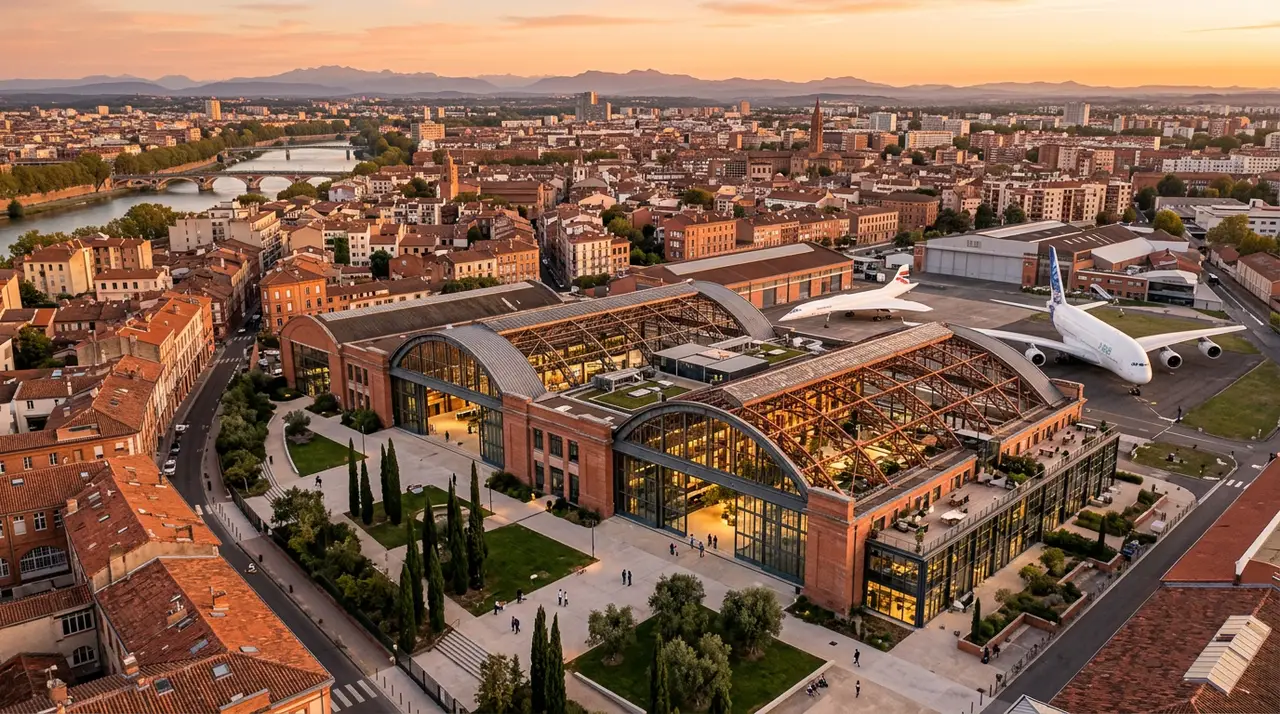
Montpellier, a June morning. A few steps from the Lez river, inside the Halle de l'Innovation, a founder is fine-tuning her pitch in front of three BIC mentors. Six months from now, her medtech startup will be incubated, funded, and set up in one of the 10,000 square meters the Métropole has dedicated to innovation. Montpellier isn't Paris. That's an advantage. With more than 10 support organizations, a public incubator ranked in the top 5 worldwide (UBI Global), and a 90% three-year survival rate for the startups it supports, Montpellier's ecosystem offers what many capital cities cannot: proximity, accessibility, and a cost-to-quality ratio that's hard to beat. This guide lists every incubator and accelerator in Montpellier in 2026, compares what they offer, and explains how to apply.
The Montpellier startup ecosystem in 2026
Montpellier is France's second-largest incubation hub outside the Paris region. That's no accident. The city combines three rare ingredients: a leading research university (the University of Montpellier, ranked in the world's top 200), a quality of life that draws talent, and a proactive public innovation policy that the Métropole has championed for more than 30 years.
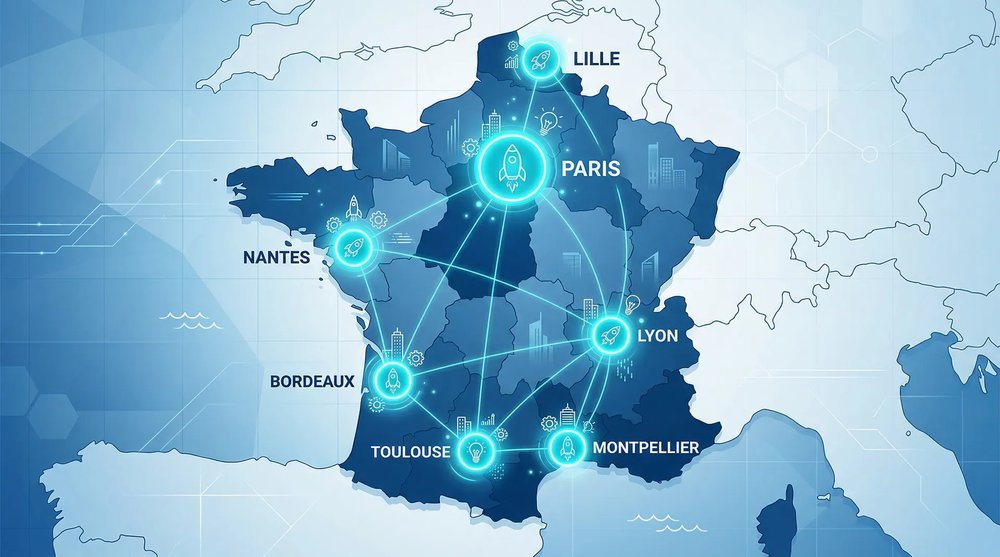
Montpellier, an innovation hub in Occitanie (key figures)
The Montpellier startup ecosystem in numbers:
- 850+ companies supported by the BIC since its creation, representing more than 10,000 direct jobs across the region.
- A 90.5% three-year survival rate for BIC companies (versus a 72% national average), and 83% at five years (versus 60% nationally). These figures put the BIC among the highest-performing incubators in the world.
- 3 BIC-incubated startups ranked in the Challenges 2025 Top 100 of startups worth investing in, following 3 others in 2024.
- The Halle de l'Innovation: a new 10,000 m² campus inaugurated by the Métropole, bringing Cap Alpha, Cap Omega, and the MIBI together under one symbolic roof.
- 7 competitiveness clusters rooted in the region: health, agronomy, water, digital, energy, marine, and aeronautics.
Montpellier isn't trying to be a mini-Paris. The city plays to its natural strengths: health (Montpellier University Hospital, the Eurobiomed cluster), agronomy (INRAE, Agropolis), digital, and cleantech. Startups that set up here gain direct access to research labs, real estate costs two to three times lower than in Paris, and a talent pool trained by one of France's largest universities.
French Tech Méditerranée and the local ecosystem
French Tech Méditerranée has structured the ecosystem from Montpellier with a clear mandate: connect local startups to national and international networks. The association is opening its 2026 memberships and runs regular events to bring founders, investors, and the region's major companies together.
Beyond French Tech, the Montpellier ecosystem rests on several pillars:
- Créalia Occitanie: a regional seed fund that provides honor loans and equity to early-stage startups in the region.
- The Occitanie Region: innovation support schemes (Pass Création, Pass Croissance, READYNOV) that complement private funding.
- Montpellier Capital Risque: an annual event that brings together more than 120 investors and connects startups directly with investment funds.
Montpellier's structural advantage: in a human-scale ecosystem, a founder can meet the decision-makers at every organization within a few weeks. In Paris, that same journey takes months.
Public and institutional incubators
Public organizations are the bedrock of the Montpellier ecosystem. Funded by the Métropole and public institutions, they offer high-quality support at a controlled cost, often without taking equity.
BIC de Montpellier (top 5 worldwide, 90% three-year survival)
The Business & Innovation Centre (BIC) of Montpellier is the cornerstone of the ecosystem. Founded more than 37 years ago, it's one of Europe's pioneers in technology incubation. The UBI Global ranking, the global benchmark for incubation, placed it 2nd worldwide in 2018 (behind Dublin), 4th in 2015, and consistently in the top 5 in the public incubator category.
The BIC in numbers:
- 850+ companies supported since its creation
- 10,000+ direct jobs generated
- Survival rate: 90.5% at three years, 83% at five years
- 3 sites: Cap Alpha (biotech, cleantech), Cap Omega (ICT, digital), MIBI (international)
Incubation program:
- Duration: 12 to 24 months (renewable)
- Cost: Subsidized rent (well below market), no equity stake
- Support: Personalized coaching, business plan assistance, investor networking, access to the Métropole's research labs
- Priority sectors: ICT, health/medtech, cleantech, agronomy, AI
Who it's for: Innovative projects with strong growth potential, and founders with a prototype or an MVP. The BIC also accepts research projects in the maturation phase (technology transfer).
How to apply: Online application on the BIC website, followed by an interview with the selection committee. Criteria: innovation, market potential, team quality, and the potential for local roots.
The BIC is the smart default. "I didn't know where to start" is the phrase founders say most often when they arrive. "I didn't know how much I didn't know" is the one they say on their way out.
INITIUM incubator (University of Montpellier)
INITIUM is the University of Montpellier's incubator, dedicated to projects born out of university research and to student entrepreneurs.
Program:
- Duration: 6 to 18 months
- Cost: Free for university project leaders
- Support: Entrepreneurial coaching, help with technology maturation, access to the SATT AxLR network (the regional technology transfer acceleration company)
- Target: Researchers, doctoral candidates, and students with a project that builds on research
What sets it apart: Its proximity to the University of Montpellier's labs (chemistry, health, environment, digital) offers unique access to research infrastructure. INITIUM bridges the academic world and the entrepreneurial one.
AgroVallée Incubation (agri/foodtech)
AgroVallée is the incubation program specializing in agronomy, foodtech, and life sciences, run by the Institut Agro Montpellier (formerly SupAgro).
Program:
- Duration: 6 to 12 months
- Sectors: Agronomy, viticulture, food, bioeconomy
- Support: Technical expertise (access to the Institut Agro's research platforms), business mentoring, connections with regional agricultural players
What sets it apart: Montpellier is France's leading agronomic research hub (INRAE, CIRAD, IRD). AgroVallée offers privileged access to this research ecosystem. For a foodtech or agritech startup, that's a competitive advantage that's hard to replicate anywhere else in France.
Gigamed Entreprises (26 startups, 3 tracks)
Gigamed is an incubator specializing in health and medtech, run by the Hérault Méditerranée Agglomeration (the Sète-Agde area, 30 minutes from Montpellier).
Program:
- 3 tracks: Incubation (6 months, pre-creation), Acceleration (12 months, post-creation), Scale (growing companies)
- 26 startups hosted across recent cohorts
- Sectors: E-health, medical devices, biotech, silver economy
What sets it apart: Gigamed specifically targets the health sector, in partnership with Montpellier University Hospital and the Eurobiomed competitiveness cluster. Its 3 tracks support a project from idea to scale, with strong local roots in the Thau basin.
Private and corporate accelerators
Alongside the public organizations, several private accelerators bring a more aggressive business focus: fundraising preparation, direct access to investors, and rapid go-to-market.
THELAB (fundraising prep, access to 120 investors)
THELAB is a Montpellier accelerator specializing in fundraising preparation. Its positioning is clear: turn startups into investable companies.
Program:
- Duration: 4 to 6 months
- Cost: Paid (program fees + possible equity stake)
- Support: Financial structuring, pitch coaching, introductions to 120+ investors (VCs, angels, family offices)
- Target: Post-MVP startups with traction, ready to raise a seed or Series A
What sets it apart: Access to a network of 120 qualified investors is the real differentiator. THELAB isn't a long incubation program: it's an intensive, results-oriented sprint. Founders arrive with a product and leave with a calibrated deck, clear metrics, and scheduled investor intros.
Village by CA Languedoc (9 startups selected, post-incubation)
The Village by Crédit Agricole Languedoc is a corporate acceleration program that selects 8 to 10 startups per cohort.
Program:
- Duration: 12 to 18 months
- Cost: Free (no equity stake, no fees)
- Support: Workspace, mentoring from Crédit Agricole executives, access to the CA network's corporate clients, networking events
- 9 new startups selected in 2026
What sets it apart: The Village by CA is a business accelerator, not a tech one. Its main draw: access to the Crédit Agricole network (SME and mid-market clients, its branch network, financial expertise). For a B2B startup targeting SMEs or regional players, it's a shortcut to those first contracts.
makesense (social entrepreneurship)
makesense is an international community of social entrepreneurs, with an active chapter in Montpellier.
Program:
- Support: Ideation workshops, incubation programs for projects with social and environmental impact
- Target: Social entrepreneurs, circular economy projects, inclusion, environment
- Cost: Accessible (often free or at a symbolic price)
What sets it apart: makesense speaks to project leaders who put impact before growth. Its international network (65,000+ engaged citizens, 100+ cities) opens up prospects for deployment well beyond the local area.
Specialized programs
Several programs round out the incubation and acceleration offer with specific themes or formats.
Alter'Incub (social innovation)
Alter'Incub is Occitanie's social innovation incubator, run by the Regional Union of SCOPs and SCICs.
Program:
- Duration: 12 to 18 months
- Sectors: Social and solidarity economy, cooperative projects, social innovation
- Support: Feasibility studies, social business models, legal support (cooperative structures), social-economy funding
What sets it apart: Alter'Incub is the region's only incubator dedicated to social innovation. It supports projects that don't fit the classic VC mold (cooperatives, associations with hybrid models, work-integration companies). For a social founder, it's the natural entry point into the ecosystem.
Montpellier Capital Risque (annual event, 120 investors)
Montpellier Capital Risque (MCR) isn't an incubator but an annual event that earns its place in this guide. Organized by the Chamber of Commerce and the Métropole, it brings together 120+ investors (VCs, angels, regional funds) and gives local startups a concentrated funding showcase over one or two days.
Format:
- Pitch sessions in front of investor panels
- Pre-arranged one-to-one meetings
- Informal networking
What sets it apart: MCR is the moment in the year when the financial ecosystem converges on Montpellier. Even if you're not ready to raise, attending as a spectator helps you understand what investors are looking for and start building your network.
Booster Innovation Montpellier (university)
Booster Innovation is a program run by the University of Montpellier in partnership with the national PEPITE scheme (the Student Hub for Innovation, Transfer, and Entrepreneurship).
Program:
- Target: Students and recent graduates (national student-entrepreneur status)
- Support: Coaching, access to a coworking space, mentoring, and the option to replace an internship with an entrepreneurial project
- Edition 2 of the PEPITE DeepTech program launched in 2026
What sets it apart: The Booster is the first step for a student who wants to start a company. National student-entrepreneur status lets you keep your social security coverage and your student status while developing your project. It's the ideal safety net for testing an idea before diving in fully.
How to join an incubator in Montpellier
You know the organizations. That leaves the practical question: how do you get in, and how do you choose?
Selection criteria (project maturity, innovation, local roots)
Each organization has its own criteria, but the fundamentals are shared:
Innovation: The project has to bring something new (technology, use case, business model). A me-too with no differentiation won't get past the committee.
Team: Incubators invest in people before they invest in ideas. Complementary skills (tech + business), full-time commitment (or a credible plan to get there), and the ability to execute.
Market potential: An innovation project that can't become a viable business has no place in an incubator (though it might belong in a research lab). Committees want to see a realistic market analysis.
Local roots: Public organizations (BIC, INITIUM, AgroVallée) favor projects that create jobs and value in the region. It's not a dealbreaker if your market is global, but your local presence has to be genuine.
Preparing your application
An effective application in 5 points:
-
The 2-minute pitch: problem, solution, market, why you. Prepare it out loud, not just on paper.
-
The business model: how you make money, what it costs, and the path to profitability. Even at an early stage, the committee wants to see that you've thought about the project's economics.
-
Proof of concept: an MVP, first users, or a letter of intent from a potential customer. Anything that shows the project is beyond the idea stage.
-
The incubation plan: what you concretely expect from the incubator (technical mentoring, investor network access, office space, legal expertise). A candidate who knows what they're looking for is a candidate who'll make the most of the program.
-
The team: founders' résumés, complementary skills, commitment. If a founder is still employed elsewhere, explain the transition plan.
Comparison: duration, cost, equity stake
| Organization | Duration | Cost | Equity stake | Sectors |
|---|---|---|---|---|
| BIC de Montpellier | 12-24 months | Subsidized rent | No | ICT, health, cleantech |
| INITIUM | 6-18 months | Free | No | University research |
| AgroVallée | 6-12 months | Low | No | Agri, foodtech |
| Gigamed | 6-24 months | Variable | No | Health, medtech |
| THELAB | 4-6 months | Paid | Possible | All (fundraising-focused) |
| Village by CA | 12-18 months | Free | No | B2B, services |
| makesense | Variable | Free/symbolic | No | Social impact |
| Alter'Incub | 12-18 months | Low | No | Social economy, cooperatives |
| Booster Innovation | 6-12 months | Free | No | All (students) |
The right choice depends on your stage:
- Idea / research: INITIUM, AgroVallée, Booster Innovation
- Prototype / MVP: BIC de Montpellier, Gigamed
- Post-MVP, ready to raise: THELAB
- Need corporate clients: Village by CA
- Social impact project: makesense, Alter'Incub
The BIC remains the most versatile choice: long duration, low cost, a broad network, and a 37-year track record that speaks for itself. If you're unsure, start there.
For a complete view of support organizations at the national level, see the guide to startup accelerators and incubators in France.
FAQ
What are the best startup incubators in Montpellier?
The BIC de Montpellier is the reference: ranked in the top 5 worldwide by UBI Global, with a 90% three-year survival rate. For health, Gigamed offers 3 specialized tracks. For fundraising preparation, THELAB gives access to 120+ investors. For research projects, INITIUM (University of Montpellier) is the natural entry point. The "best" depends on your stage and your sector.
How do you join an incubator in Montpellier?
The standard process has 3 steps: an online application, an interview with the selection committee, and a decision within 2 to 6 weeks. The key criteria are the project's innovation, the team's quality, market potential, and local roots. Prepare a 2-minute pitch, a business model (even a preliminary one), and a proof of concept (an MVP, first users, or a customer letter of intent).
How much does an incubation program cost in Montpellier?
Most public incubators in Montpellier are free or offer subsidized rent, with no equity stake. The BIC provides offices at preferential rates (well below market). INITIUM and Booster Innovation are free for university projects. Only certain private accelerators like THELAB are paid, sometimes with an equity stake. The Village by CA is entirely free.
What's the difference between an incubator and an accelerator?
An incubator supports projects in the creation phase (idea to MVP) over a long period (12-24 months), with a focus on maturing the project: business model, prototype, first customers. An accelerator takes more mature startups (post-MVP, with traction) and pushes them over a short period (3-6 months) toward a specific goal: raising funds, signing contracts, or scaling. In Montpellier, the BIC is an incubator and THELAB is an accelerator. Some organizations, like Gigamed, offer both.