EU Inc: What the New European Legal Status Means for French Startups
On March 18, 2026, the European Commission unveiled EU Inc, a single legal status for founding a startup anywhere in Europe. Fully digital incorporation in 48 hours, zero minimum capital, and stock options harmonized across all 27 member states. For a French founder, the question is simple: does this change anything today? Short answer: not yet. EU Inc is a legislative proposal, not an online form. But what it maps out is concrete, quantified, and potentially transformative for any startup that hires, raises, or operates beyond French borders. This guide explains how it works, compares EU Inc to existing statuses (SAS, SARL, Delaware C-Corp), and lays out what you can do right now while waiting for the rollout planned for 2027-2028.
What is EU Inc?
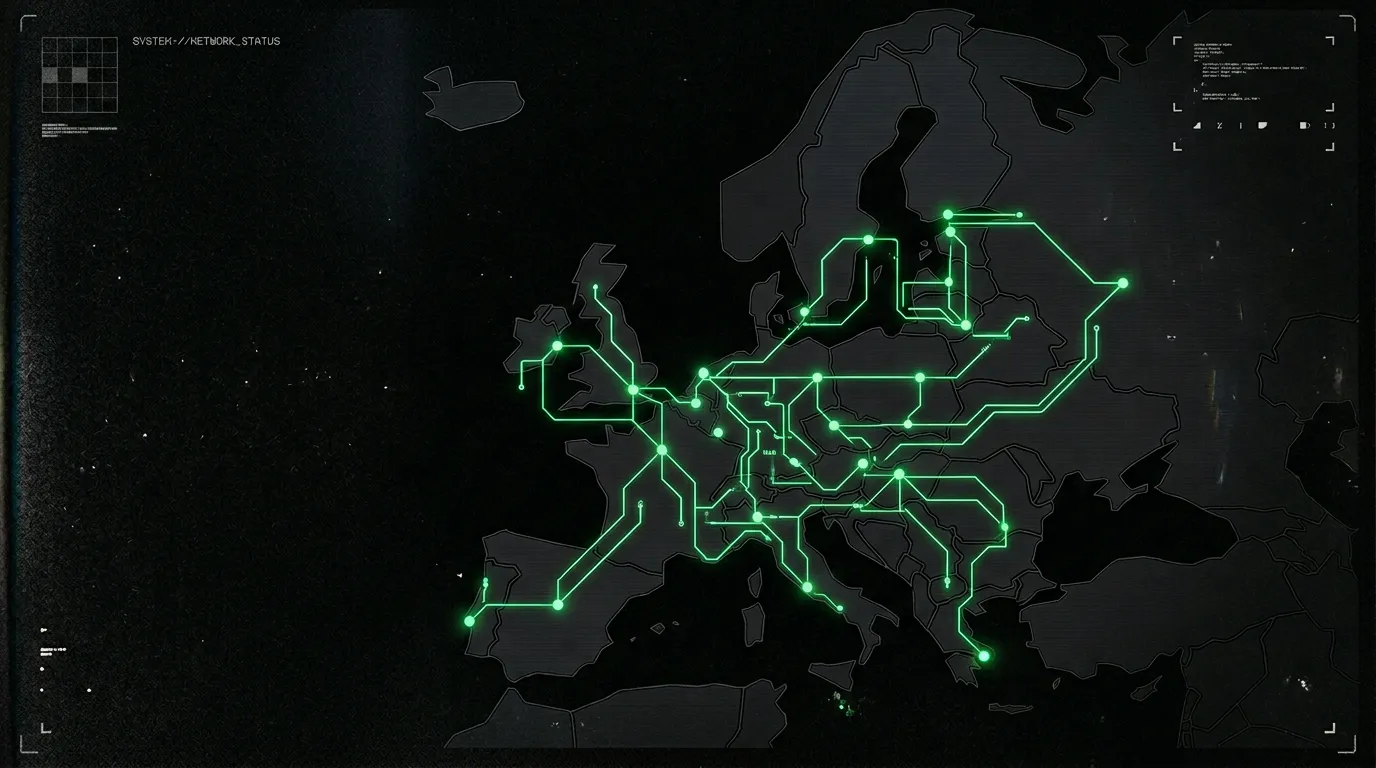
EU Inc is not a reform of French company law. It's a 28th regime: an additional legal layer that sits on top of the 27 existing national systems without replacing them. A founder will be able to choose to set up an EU Inc instead of an SAS or a GmbH, exactly the way you choose between an SAS and an SARL today. The difference: the rules will be identical from Lisbon to Helsinki.
The March 2026 announcement: the Commission's context and ambition
Ursula von der Leyen laid the groundwork at Davos in January 2026, and the Commission then published its proposal on March 18. The starting diagnosis is stark: the EU has 27 national bodies of law and more than 60 different legal forms. An Estonian founder who wants to hire in France and raise in Germany has to navigate three separate systems, three lawyers, three accountants.
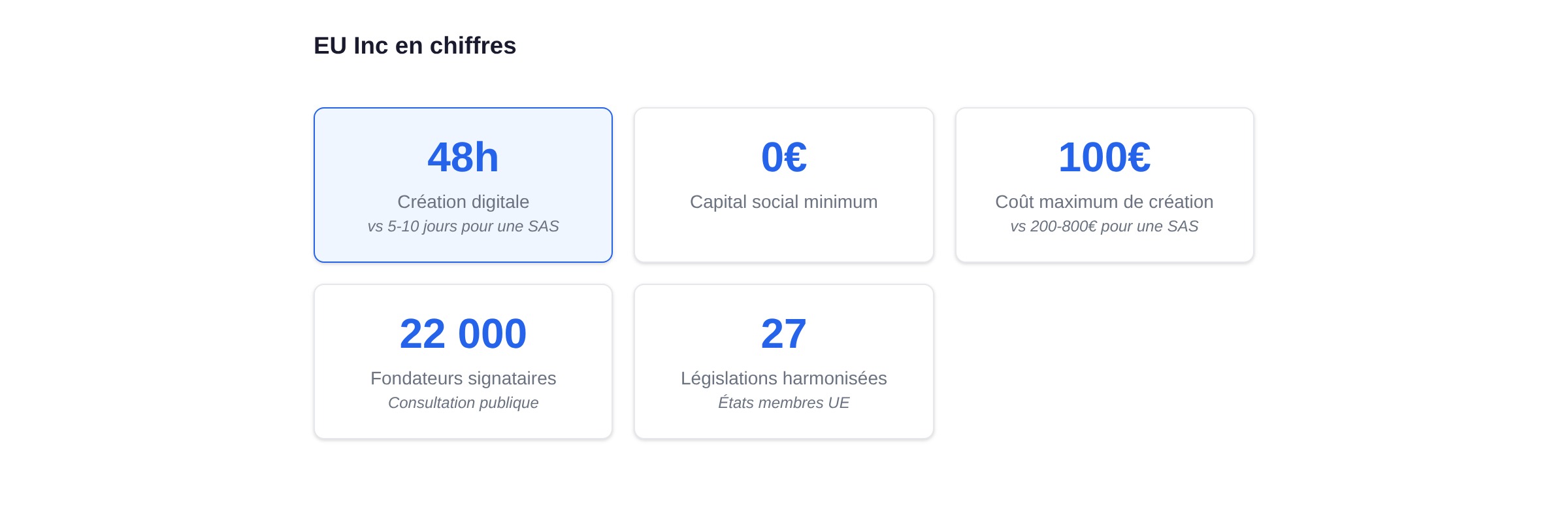
22,000 founders and investors backed the initiative during the public consultation. The most telling figure: more than 80% of respondents said that the differences between national laws were a significant obstacle. The Commission is aiming for a political agreement by the end of 2026.
The 3 pillars: fast incorporation, zero capital, harmonized stock options
Pillar 1: Digital incorporation in 48 hours. Everything is done online, from any member state. No mandatory notary (a major change for France and Germany). Cost capped at 100 euros, versus 200 to 800 euros for an SAS.
Pillar 2: No minimum share capital. Zero euros. Not even the symbolic euro of the SAS. In practice, most startups launch with 1,000 to 5,000 euros of SAS capital, by convention rather than obligation. EU Inc makes that convention optional.
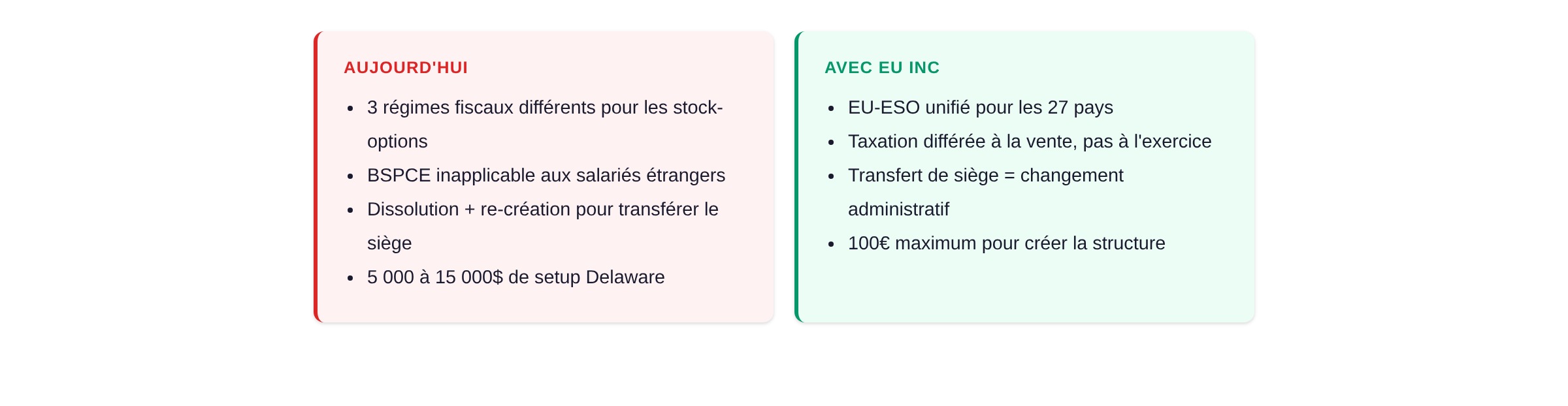
Pillar 3: Harmonized stock options (EU-ESO). The EU-ESO program (European Employee Stock Ownership) offers a unified tax regime, with taxation deferred to the moment shares are sold rather than when they're exercised. Today, a French employee who exercises their BSPCE pays the 30% flat tax. A German employee is taxed on the exercise gain as ordinary income. EU-ESO harmonizes all of that.
EU Inc vs SAS vs SARL vs Delaware: a practical comparison
You have an idea, a co-founder, and a European market in mind. Here's the comparison that was missing.
Comparison table: incorporation, capital, governance, taxation
| Criterion | EU Inc (proposed) | SAS (France) | SARL (France) | Delaware C-Corp |
|---|---|---|---|---|
| Incorporation | Digital, 48h, €100 max | 5-10 days, €200-800 | 5-10 days, €200-600 | 1-3 days, ~$300-500 |
| Minimum capital | €0 | €1 | €1 | $0 |
| Governance | Flexible, standardized bylaws | President + CEO, free bylaws | Manager, regulated bylaws | Board + Officers, very flexible |
| Taxation | National (corporate tax of the country of registration) | Corporate tax 25% | Corporate tax 25% | Federal 21% + State tax |
| Stock options | EU-ESO, deferred taxation | BSPCE (30% flat tax) | No BSPCE | ISO/NSO, variable |
| Mobility | Simplified transfer of registered office | Dissolution + re-incorporation | Dissolution + re-incorporation | Not applicable |
Why Delaware remained the preferred option for French startups
French founders, based in Paris, with French clients, setting up a C-Corp in Delaware. The paradox is well known.
Three reasons. American VCs (and plenty of European VCs) prefer to invest in US-law structures: standardized term sheets, predictable case law. The US stock-option regime is easier to read than BSPCE for employees across multiple countries. And a Delaware holding company makes it easier to access US capital markets.
The problem: this structure is expensive. Expect 5,000 to 15,000 dollars for the legal setup, 300 dollars a year for the registered agent, plus the franchise tax and the complexity of running a US holding company with a French subsidiary. For a pre-seed startup targeting the European market, it's often unnecessary.
What EU Inc actually changes
EU Inc targets exactly this gray area. A French founder who hires in Spain and raises from a Berlin-based VC will no longer need three entities or a Delaware setup. A single structure, recognized everywhere in Europe, with standardized governance rules. And transferring the registered office between member states becomes a simple administrative change, whereas moving an SAS from Paris to Amsterdam today requires a dissolution and a re-incorporation.
The 5 concrete advantages for a French founder
Incorporate in 48h (vs 5-10 days for an SAS)
Setting up an SAS in France: draft the bylaws, open a business account (some banks take two weeks), deposit the capital, publish a legal notice, register with the commercial court. Five business days minimum. EU Inc promises 48 hours, 100% online, pre-approved bylaws, 100 euros maximum. For a founder who wants to formalize their structure before an investor meeting, the difference is real.
Share capital at €0 (vs the symbolic €1 SAS minimum)
The difference between 0 and 1 euro of capital is negligible in practice. But make no mistake: an investor who sees an EU Inc capitalized at 0 euros will ask the same questions they ask today. Share capital has never been a funding criterion. What matters is the lean canvas, traction, and the ability to execute.
Harmonized stock options (EU-ESO)
This is the real game changer. A French startup that hires a developer in Lisbon and a marketing lead in Berlin has to navigate three different tax regimes for stock options. The French BSPCE doesn't apply to foreign employees (except under restrictive conditions).
EU-ESO offers a single framework with taxation deferred to the moment of sale, not exercise. No forced cash-out to pay tax on a theoretical gain. For the founder, it's a powerful recruiting tool across the entire continent. If you're raising from Paris VC funds with the ambition to hire across Europe, EU-ESO considerably simplifies the equity package.
Simplified cross-border remote work
An underrated topic. A French employee of a Paris startup who works three months from Barcelona potentially creates a "permanent establishment" in Spain, with local tax and social security obligations. EU Inc, as a pan-European structure, simplifies handling these situations (even if the regulatory details remain to be clarified).
Access to European markets without redomiciliation
A French SAS that wants to open an office in Munich sets up a German branch or subsidiary. With EU Inc, the structure is natively recognized across all 27 member states. For a B2B SaaS startup that sells and invoices in several European countries, this is a major simplification.
What EU Inc does not (yet) solve
EU Inc is a genuine step forward, but it's not a magic wand.
The 27 national bodies of law don't disappear
EU Inc is a 28th regime, not a replacement for the 27 existing ones. Labor law remains national. So does intellectual property law. If you hire in France, French labor law applies, whether your company is an SAS or an EU Inc.
Taxation remains national
The most commonly misunderstood point. EU Inc does not create a European tax regime. An EU Inc based in Paris will pay 25% corporate tax, just like an SAS. An EU Inc based in Ireland will pay 15% (the OECD minimum rate). EU Inc harmonizes the legal form, not the taxation. The only exception: EU-ESO, which offers a harmonized regime specifically for stock options.
Uncertain rollout timeline (not before 2027-2028?)
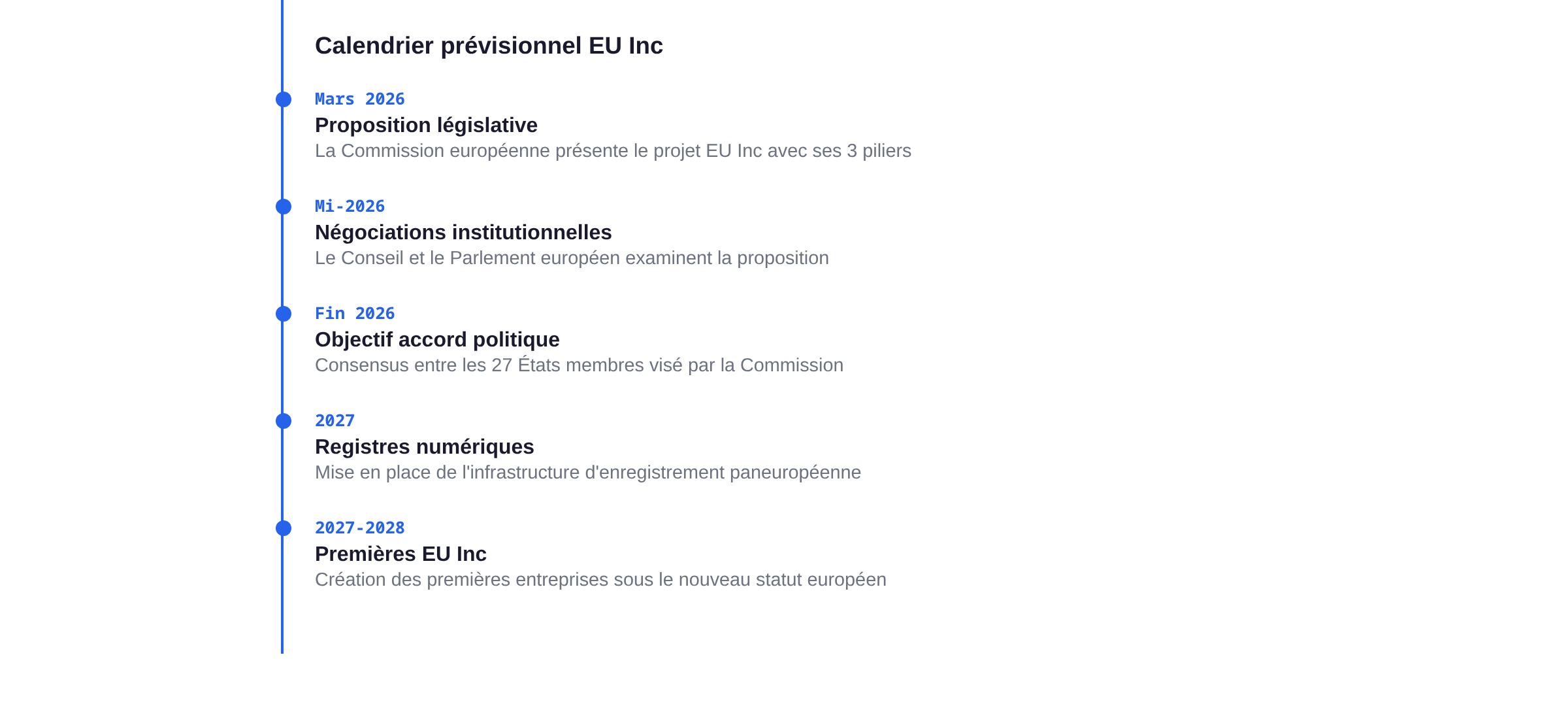
The Commission is aiming for an agreement by the end of 2026. Assuming the Council and Parliament agree on schedule (optimistic, given the complexity), the digital registries then have to be set up. Realistically, the first EU Incs won't appear until 2027, or even 2028. And some countries (Germany with its notarial system, the Netherlands with its holding structures) could slow the process down. A consensus among 27 is never a given.
When and how to use EU Inc?
If you're founding your startup today, EU Inc isn't an available option. But you can get ready.
The startup profile that fits the EU Inc status
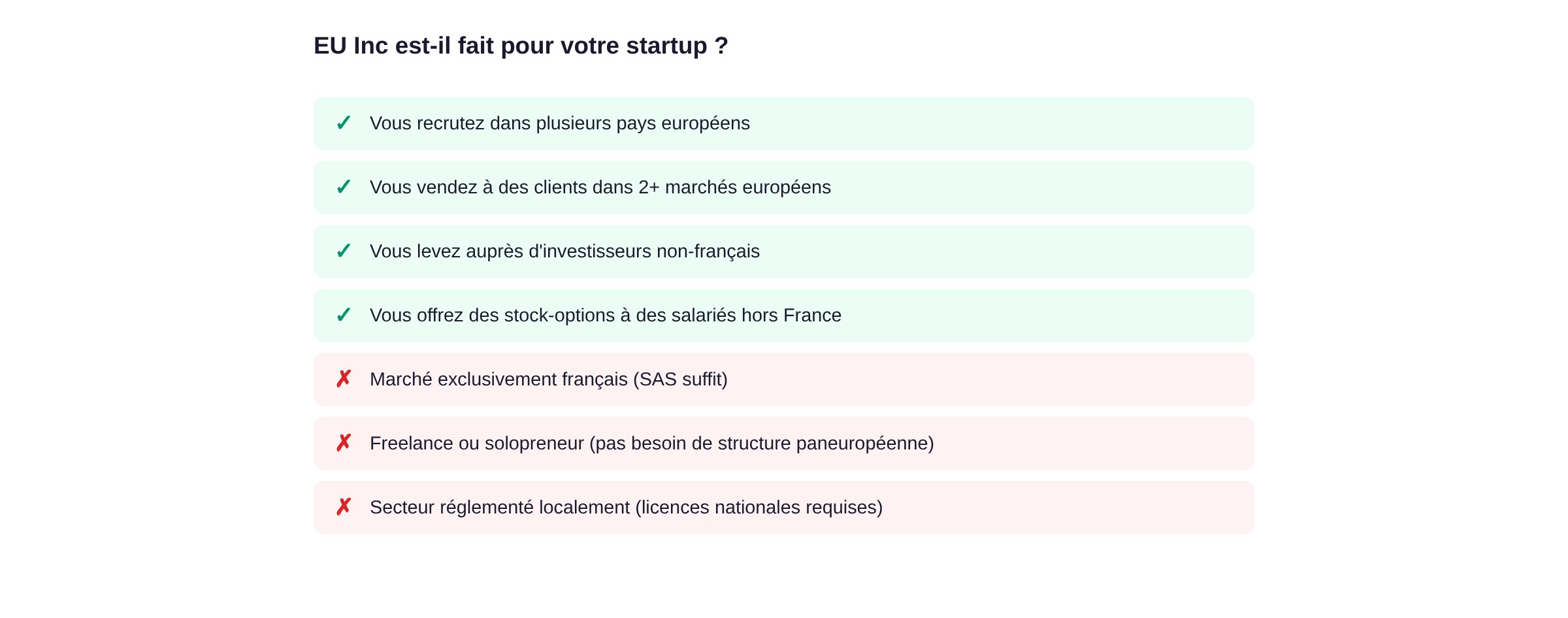
You're the right target if:
- You hire (or plan to hire) in several European countries
- You sell to clients in at least two European markets
- You're considering raising from non-French investors
- You want to offer stock options to employees outside France
EU Inc probably isn't for you if:
- Your market is exclusively French
- You're a freelancer or solopreneur
- You're in a locally regulated sector (healthcare, banking) where licenses are national
Projected incorporation steps
Based on the Commission's proposal:
- Choice of country of registration. Taxation will depend on this choice.
- Online registration. Via a European digital portal. Standardized bylaws, maximum cost 100 euros.
- Identity verification. Digital, probably via eIDAS.
- Registration. Within 48 hours maximum. A single identification number valid across all 27 member states.
- Opening a bank account. This point remains unclear. Today, it's often the bottleneck. One to watch.
While waiting for EU Inc: the options available today (SAS + holding, SASU, Delaware)
You can't wait until 2027. Here are the options.
SAS or SASU. The default choice. Flexible, BSPCE-compatible, well understood by local investors. To structure a first round, a BSA AIR remains the fastest instrument.
SAS + holding. If you anticipate European expansion, an operating SAS with a holding company makes it easier to set up subsidiaries and to optimize IP and dividends.
Delaware C-Corp + French subsidiary. Reserved for startups targeting the US market or raising from American VCs. High cost: 10,000 to 20,000 euros in the first year. Only make this choice if your investors require it.

FAQ
Is EU Inc available yet?
No. EU Inc is a legislative proposal presented on March 18, 2026. It has to be adopted by the Council and the European Parliament. The rollout isn't expected before 2027 at the earliest. No EU Inc exists to date.
Does EU Inc replace the SAS in France?
No. EU Inc coexists with national legal forms. The SAS, the SARL, and the SA remain available. EU Inc is an alternative, not a replacement.
What is EU-ESO (formerly EU Fast)?
EU-ESO (European Employee Stock Ownership) is the stock-option component of EU Inc. It's a harmonized tax regime with taxation deferred to the moment shares are sold, not when they're exercised. The employee is taxed only when they actually sell their shares. EU-ESO is optional.
Is EU Inc suitable for early-stage startups?
Potentially. The absence of minimum capital and fees capped at 100 euros make it accessible. But at the seed stage, the priority remains the product and the first clients. If your startup is purely French in its early days, a classic SAS remains the pragmatic choice. EU Inc will become relevant once you start hiring or selling outside France, generally from seed or Series A onward.